CASE STUDY | HEALTH AND NUTRITION
The Case of Sumita Kadraka, Polama Gram Panchayat
| Gram Panchayat / Village | Polama / Polama |
| Beneficiary | Sumita Kadraka (Lactating Mother) |
| Age | 21 years |
| Husband | Raju Urlaka |
| Household members | Sumita, her husband and her parents-in-law |
| Main livelihood | Agriculture: paddy and cotton, with vegetables grown for household consumption |
| Child | Female infant, born 3 February 2026 |
| Thematic area | Maternal and child health and nutrition |
Overview
Severe malaria in the fifth month of her first pregnancy left Sumita Kadraka, a 21-year-old woman of Polama village, critically anaemic and underweight. Her haemoglobin fell to 6.9 g/dL, a level classified as severe anaemia in pregnancy. Her child was later born at term with a low birth weight of 1.8 kg. Sumita was not a disengaged beneficiary. She was already registered for antenatal care, taking iron and folic acid tablets and attending the Village Health, Sanitation and Nutrition Day (VHSND). Her case therefore shows what a continuous, community-level support system can achieve, and how it can detect and respond to a medical emergency in a woman who was already within the service network.
The sections that follow document the course of her pregnancy, the malaria episode and its treatment, the birth and early growth of her daughter, the Nutri Garden that changed the household’s diet, and the distinct roles played by the frontline workers who supported her.
1. Household Context
Sumita lives in Polama village with her husband, Raju Urlaka, and her parents-in-law. Before her pregnancy she was engaged in household work together with the family. The household depends mainly on agriculture, cultivating paddy and cotton, along with a small quantity of vegetables grown for its own consumption.
Her diet before and during pregnancy consisted largely of the Take Home Ration (THR) received from the Anganwadi Centre (AWC) and home-cooked meals of rice and dal, taken three to four times a day, with seasonal pulses added when available. The family had no established habit of purchasing vegetables and ate mainly rice and dal, or whatever happened to be growing in the garden, such as cowpea. The household’s diet was therefore limited in variety, which is a recognised risk factor for maternal anaemia.
2. Antenatal Care Before the Illness
Sumita’s pregnancy was registered with the health system and her weight at registration was recorded as 36 kg, which is low for a pregnant woman. She attended six antenatal check-ups, one each month, and the Poshan Sathi tracked and supported each visit. She took iron and folic acid (IFA) tablets and attended the VHSND regularly. She had also received nutrition counselling from the Poshan Sathi, the Anganwadi Worker (AWW) and the Accredited Social Health Activist (ASHA) before she fell ill. Before the illness her weight had risen to 41 kg.
3. The Nutri Garden: Changing How the Household Eats
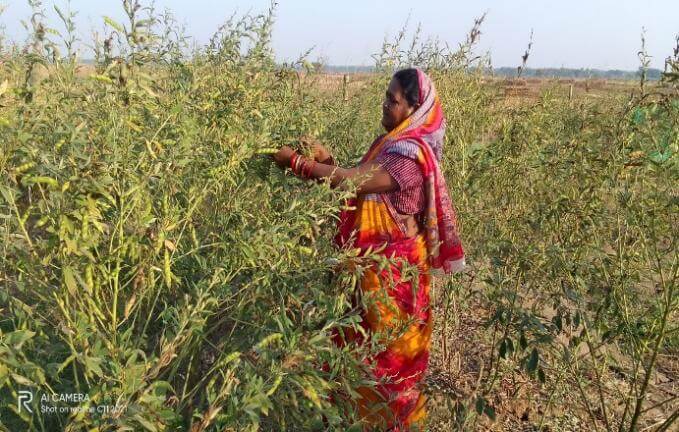
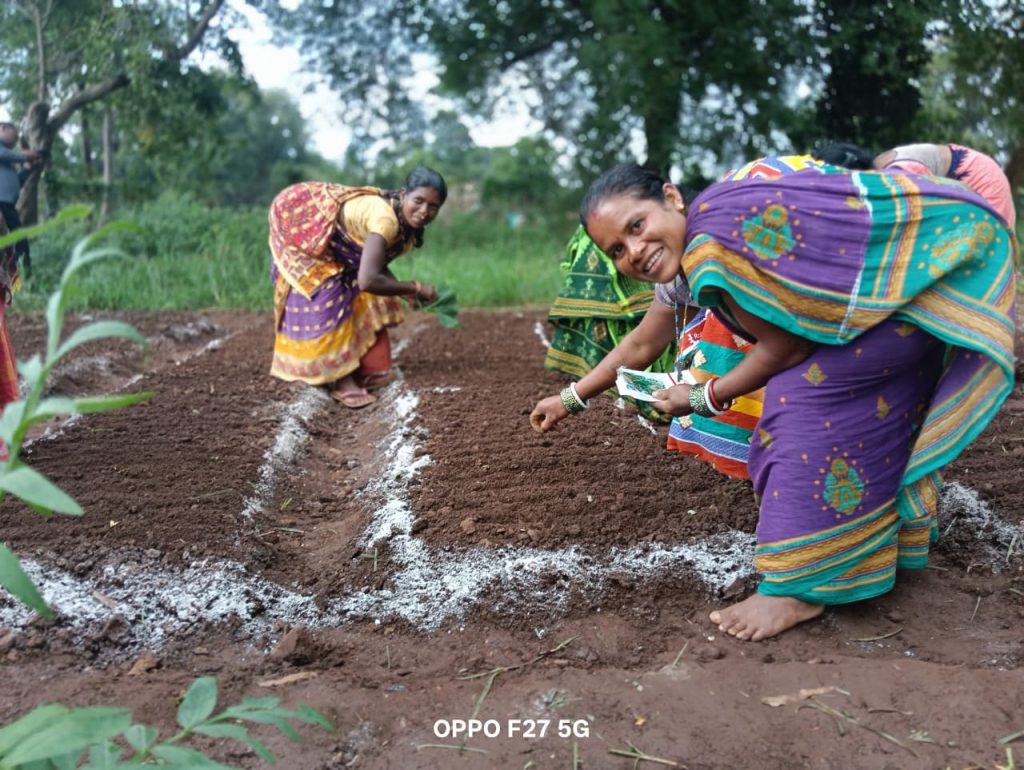
In July 2025, during her pregnancy, the family established a Nutri Garden at the back of their home with the guidance of the Poshan Sathi. The garden occupies two cents of land. Before it was started, the family grew only cowpea on this land. It now yields chilli, brinjal, pumpkin, cowpea and lady’s finger (okra).
The Poshan Sathi initiated regular counselling meetings with the family on the health benefits of eating fresh, varied food, and encouraged them to grow seasonal vegetables rather than buy vitamins and nutrition from outside. The family maintains the garden itself and harvests from it seven to eight times a month. All produce is consumed at home and none is sold. Okra, ridge gourd and pumpkin are now regular parts of the household’s meals.
Household expenditure on vegetables has not changed significantly, since the family did not previously buy them. The change that matters is in habit. The household now eats vegetables regularly, from its own land and at no additional cost, and Sumita herself takes pride in the garden she grows.
4. The Malaria Episode
In the fifth month of pregnancy, Sumita developed fever, headache, body pain and vomiting. Five to six days passed before treatment was sought. The ASHA attended to her first and, after one or two days, referred her to the Primary Health Centre (PHC) at Majhiguda, Kalyansingpur. Her haemoglobin had been recorded at 7.7 g/dL before treatment, and the lowest value, 6.9 g/dL, is documented in her Mamata card. Her weight had fallen from 41 kg to 39 kg. Severe anaemia in pregnancy is recognised to increase the risk of preterm labour, haemorrhage and complications for both mother and child, and the situation was therefore serious for Sumita and her unborn baby.
The Auxiliary Nurse Midwife (ANM) facilitated the referral for iron sucrose treatment. Sumita was not admitted. She received treatment over four to five days, including two doses of iron sucrose, and her husband accompanied her throughout. This was her first pregnancy, and the family took the seriousness of her condition to heart. They acted on the ANM’s advice without delay.
Treatment was followed by continuous counselling on nutrition and self-care, regular follow-up, and better food intake. Her haemoglobin rose to 8 g/dL, and her weight increased to 43 kg before delivery. This phase of timely referral and sustained care stabilised her health and prepared her for a safer delivery.
5. Delivery and the Low-Birth-Weight Infant
Sumita gave birth on 3 February 2026 at the Government Hospital, Sikarpai. The delivery was normal and the baby, a girl, was born at term. She weighed 1.8 kg at birth and measured 50 cm in length. A low birth weight at term is commonly associated with maternal under-nutrition and anaemia, and the family understandably felt worry and fear. Her weakness required extra care from the first day.
Breastfeeding was initiated immediately. The baby suckled well, the mother faced no difficulty, and the child was exclusively breastfed. After delivery, Sumita’s haemoglobin was tested again and stood at 8.9 g/dL, an improvement on the 8 g/dL recorded after treatment. Her weight after delivery was 39 kg.
6. Postnatal Support at Home
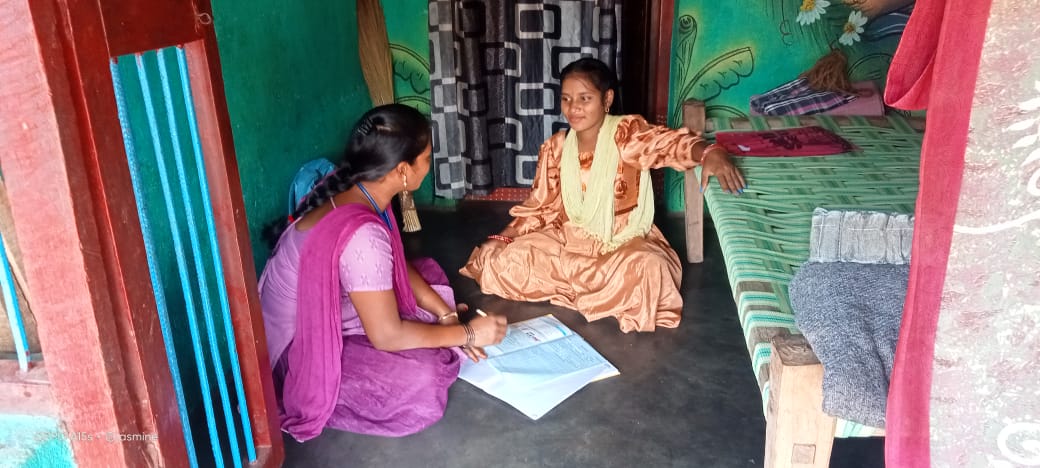
During this critical period, the ASHA, the AWW, and the Poshan Sathi stood beside Sumita as a support system. They visited her home repeatedly, not only to guide her but to build her confidence. They counselled her on the care of a low-birth-weight baby, the importance of exclusive breastfeeding, hygiene, and the use of nutritious food that is locally available and affordable.
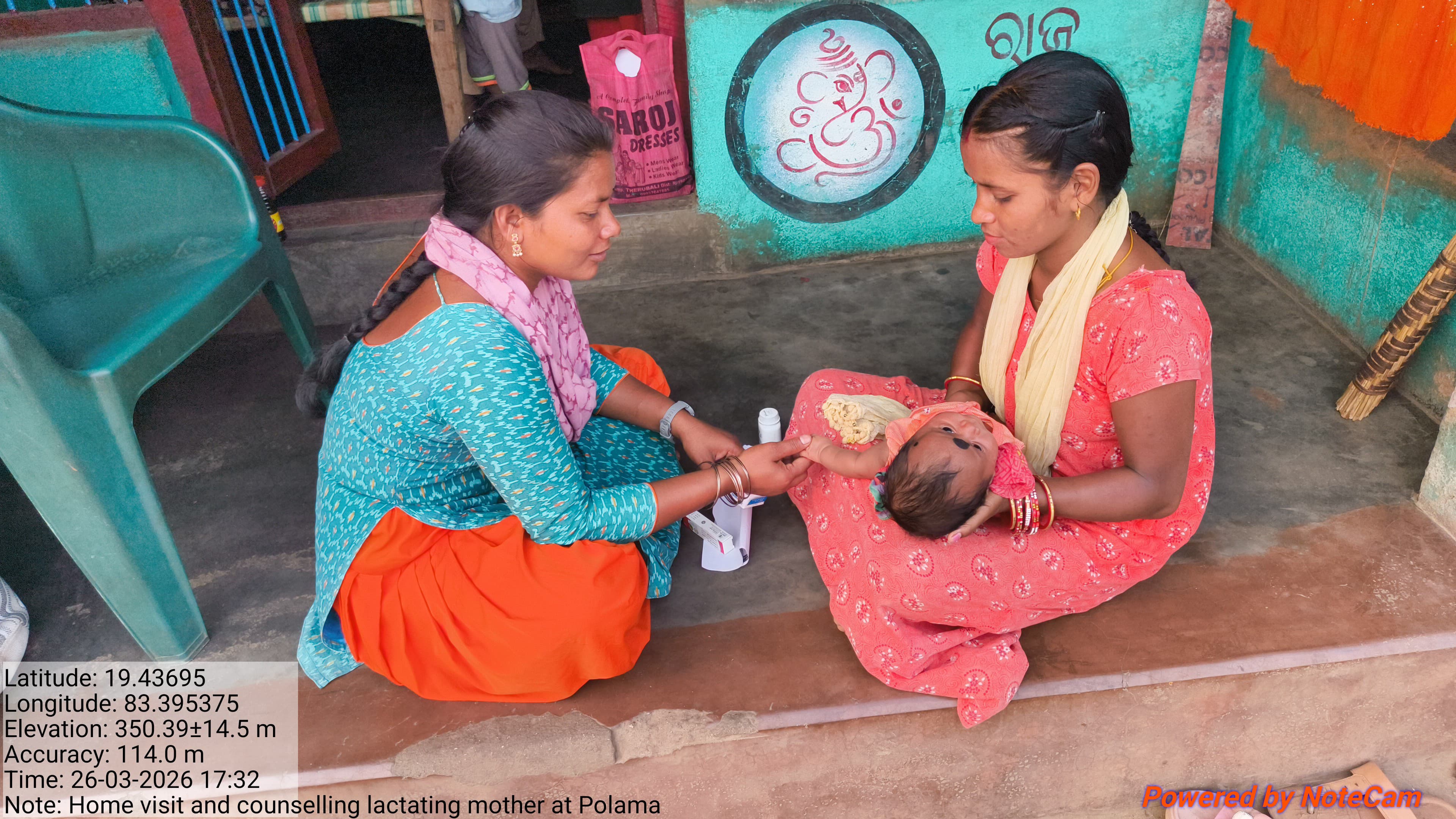
After 3 months of the birth, the baby developed a skin infection affecting the body and face. Because Sumita had remained under regular counselling and home visits, the condition was identified at an early stage and the team guided her to take the child to the Kalyansingpur health facility without delay. Sumita was frightened, but she trusted their advice and went with her husband. At the facility, the child received treatment and counselling. The family was advised to apply natural coconut oil, give the prescribed medicines, and maintain strict hygiene. With continued follow-up, both mother and child improved.
7. The Infant’s Growth and Feeding
The child’s weight has been tracked since birth and shows a steady gain.
| Period | Weight (kg) |
|---|---|
| At birth | 1.8 |
| 1 month | 2.1 |
| 3 months | 3.2 |
| Current | 5.6 |
Her weight has more than tripled since birth, a gain of 3.8 kg. Complementary feeding began after six months of age, as recommended, with chhatua as the first food. On a normal day, she now eats chhatua, rice and boiled vegetables two to three times, and she is also given eggs, pulses, vegetables, and fruits. The food is prepared by her mother and grandmother. The family reports that its feeding practices have changed as a result of the counselling received.
8. Immunisation and Use of Health Services
The child has received BCG and, from about 45 days of age, the doses of IPV, OPV, rotavirus, PCV and pentavalent vaccines, with the pentavalent series given in three doses at alternate-month intervals up to five months of age. The dose due at nine months is pending. The ASHA and AWW remind Sumita of due dates, and she continues to attend postnatal care visits regularly.
Sumita attended the VHSND regularly even before her illness, so the change in her behaviour is one of depth and conviction rather than attendance alone. She now attributes her recovery to the nutritious food she ate and takes pride in growing it in her own backyard. She also recognises that regular counselling enabled her to detect her child’s skin infection early and obtain medical care in time.
Results at a Glance
| Indicator | Before / at the point of crisis | Latest status |
|---|---|---|
| Maternal haemoglobin | 6.9 g/dL (severe anaemia) | 8.9 g/dL (after delivery) |
| Maternal weight | 39 kg during illness | 43 kg before delivery; 39 kg after delivery |
| Infant weight | 1.8 kg at birth | 5.6 kg (current) |
| Nutri Garden | A single crop (cowpea) | Five crops; harvested 7–8 times a month |
| Infant immunisation | — | Doses due to date received; the dose due at nine months is pending |
9. The Role of Each Frontline Actor
The outcomes in this case came from distinct, complementary roles, set out below.
| Actor | Contribution |
|---|---|
| Poshan Sathi | Made five to six home visits and four further visits to assess Sumita’s condition after the postnatal visit. Counselled on antenatal food, hygiene and post-pregnancy feeding. Tracked antenatal visits, initiated regular counselling meetings, and guided the family in establishing and diversifying the Nutri Garden. |
| ASHA | Was the first to attend Sumita during the malaria episode and referred her to the PHC. Supported antenatal care and immunisation, and reminds the family of due dates. |
| ANM | Facilitated the referral for iron sucrose treatment. |
| Anganwadi Worker (AWW) | Provided Take Home Ration, held the VHSND sessions, reminded the family of immunisation dates and gave nutrition counselling. |
| Harsha Trust | Works through the Poshan Sathi, who operates under Harsha Trust and coordinated with the ASHA, ANM and AWW to provide Sumita with continuous support. |
10. Significance
This case shows that a first-time mother already linked to health and nutrition services can still face a life-threatening complication, and that it is the quality and continuity of support around her that determines the outcome. A malaria illness was recognised by the ASHA, a referral was made and followed by the family, and iron sucrose treatment was delivered. Counselling and home visits then carried the mother and her low-birth-weight child through recovery.
The effects extend beyond one mother and child. A Nutri Garden that began with a single crop now supplies the whole household with fresh vegetables at no extra cost, and a habit of eating nutritious food has taken root in a family that previously subsisted largely on rice and dal. Sumita herself has moved from fear to confidence. She is more aware, better informed and caring towards her child.
This is not only the story of one mother. It is a story of timely intervention, continuous effort and human connection. The dedication of the ASHA, the AWW and the Poshan Sathi, supported by Harsha Trust, turned fear into strength and gave a fragile life the chance to grow.