Gajapati Organic Farmer Producer Cooperative Society Ltd. (FPCL) | Gumma Block, Gajapati District, Odisha
Gumma is a remote, hilly and tribal-dominated block of Gajapati district, where agriculture and forest-based livelihoods are central to household income. Farmers cultivate paddy, maize, millets, pulses and horticultural crops and also depend on non-timber forest produce (NTFP). However, difficult terrain and poor connectivity have historically limited farmers’ access to quality agricultural inputs, government schemes, technical information, institutional services and organised markets.
In this context, the Gajapati Organic Farmer Producer Cooperative Society Ltd. (FPCL) has emerged as an important farmer institution serving 512 farmers across 91 villages, including 332 women members as of 2025–26. Its experience in Gumma shows how a farmer-owned institution can improve access to services and opportunities by connecting farmers with quality inputs, government departments, technical institutions and markets.
Improving Access to Quality Agricultural Inputs
For farmers in the interior villages of Gumma, purchasing agricultural inputs was often difficult. Many depended on local dealers for seeds and fertilisers, with limited assurance of quality, pricing or after-sales support. Farmers in remote villages were also less likely to receive timely information about government schemes and institutional support.
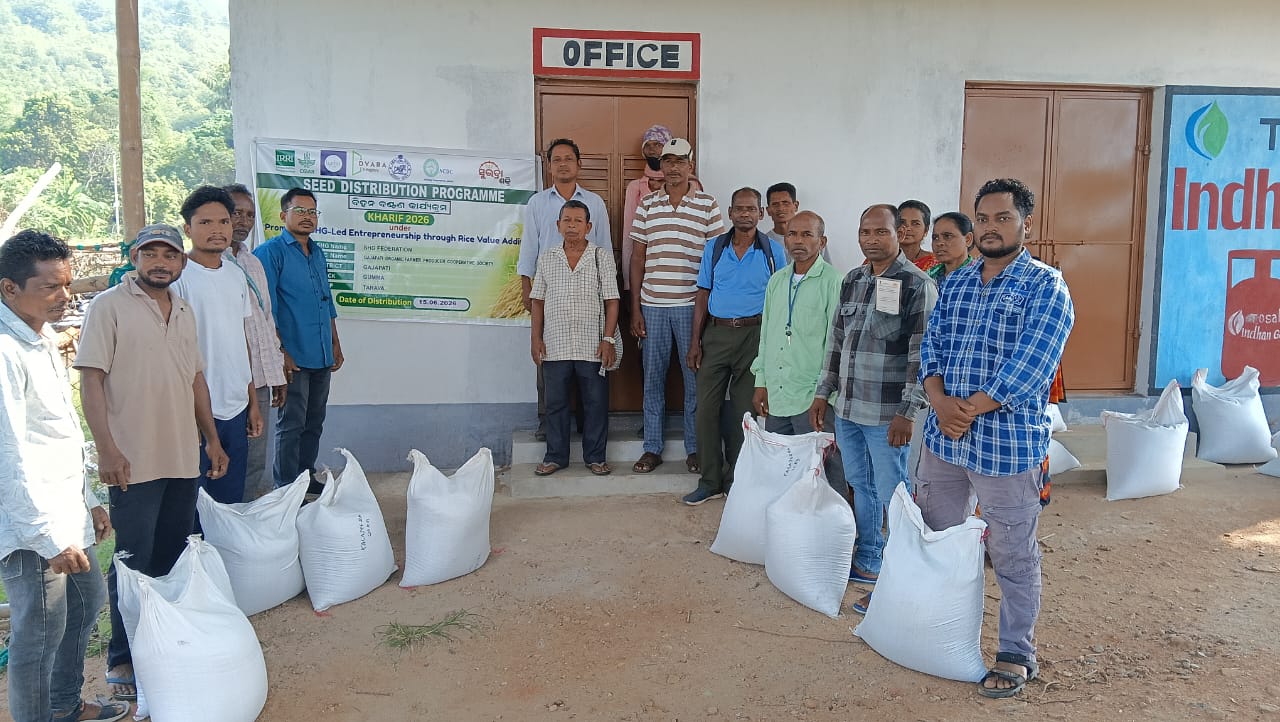
FPCL addressed this gap by obtaining an Odisha State Seed Corporation (OSSC) seed licence, enabling it to distribute certified seed. Instead of requiring farmers from remote villages to travel to distant markets, FPCL developed a village-level delivery system through which seeds could be made available closer to farmers.
During the Kharif season, FPCL distributed 50 quintals of certified paddy seed to more than 200 member farmers. Across its operations, the institution supplied around 80 quintals of seed, giving its 512 members access to a formal source of agricultural inputs.
For farmers, this has meant greater access to certified seed and reduced dependence on unregulated local sources. The village delivery approach has also made it easier for farmers in interior locations to access inputs without travelling long distances.
Expanding Farmers’ Access to Diversified Livelihoods
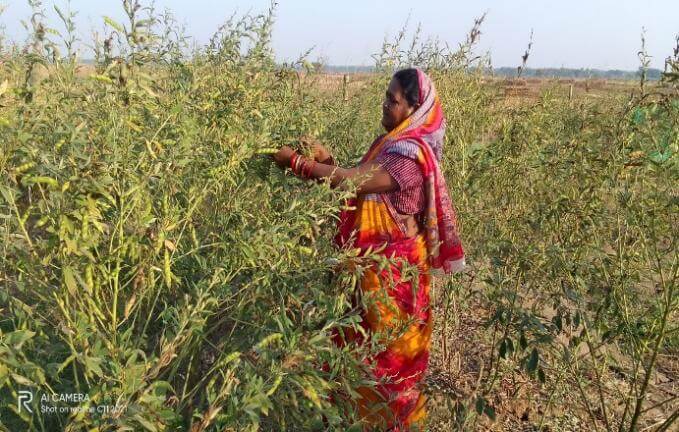
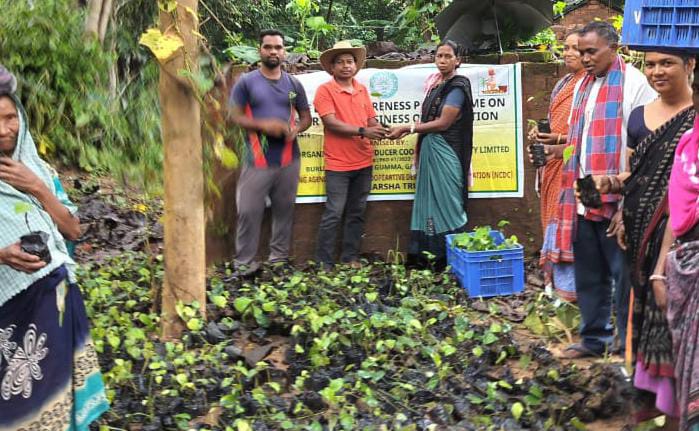
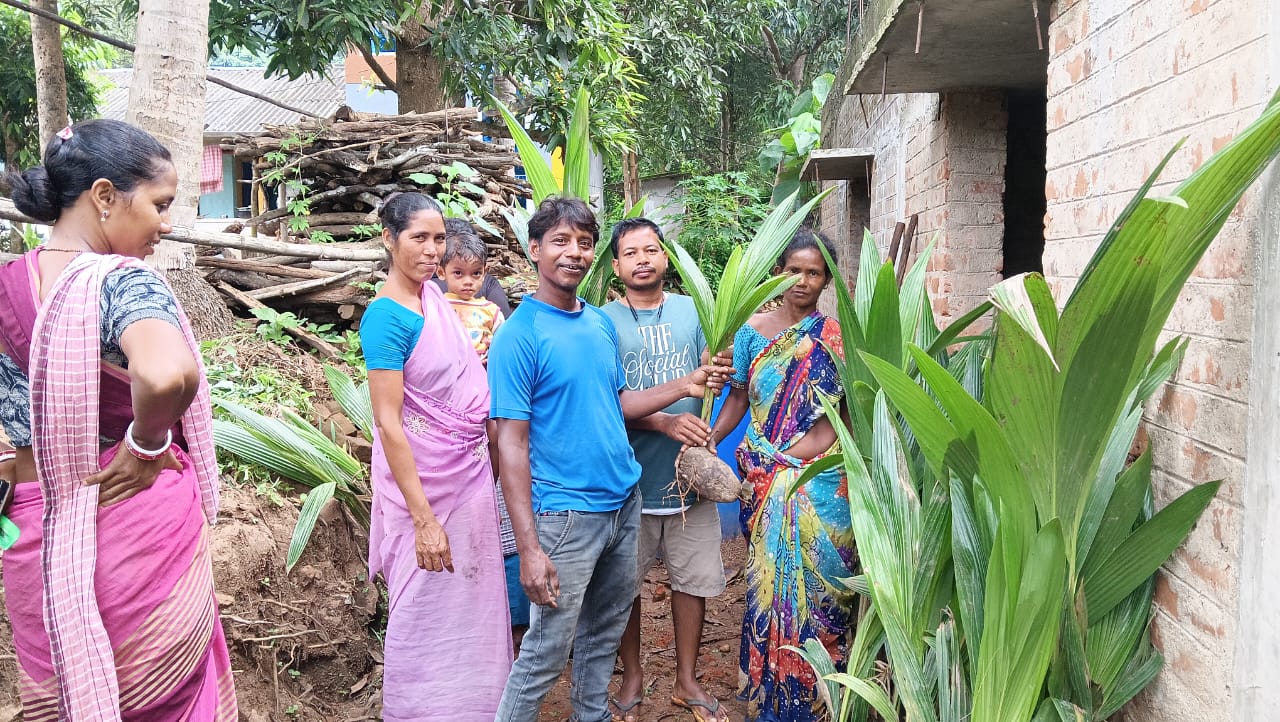
Improved access to inputs was accompanied by efforts to diversify crop production. Through convergence with Gram Vikas, 50 acres were brought under pigeon pea cultivation. The institution also facilitated horticultural diversification through the distribution of 10,000 black pepper, 500 mango, 500 lemon and 300 jackfruit saplings, along with other horticultural species.
Farmers were also supported to take up 50 acres of Niger, 50 acres of sunflower under the National Mission on Edible Oils and approximately 200 acres of groundnut cultivation through the distribution of 30 quintals of seed. Organic farming practices were promoted through convergence with Swayamsree, including the use of yellow sticky traps for eco-friendly pest management.
These initiatives have provided farmers with opportunities to move beyond dependence on a limited number of staple crops and explore pulses, oilseeds and horticultural crops that can contribute to greater diversification of household livelihoods.
Improving Market Security for Maize Farmers
Maize is an important crop in Gajapati, but farmers have faced price fluctuations and delays in payment when selling through open markets. To address this, FPCL entered into an MoU with Syngenta under a Double Cross Hybrid Maize Seed Production Programme.
The arrangement provides participating farmers with inputs, technical support and procurement at a pre-agreed price. For farmers, the partnership provides greater clarity about the terms of production and procurement and reduces some of the uncertainty associated with open-market price fluctuations.
FPCL has also partnered with ICRISAT on climate-resilient crop production and with IRRI on a GI-tagged Kalajeera paddy production programme. Exposure visits and crop-specific training have further enabled farmers to gain knowledge of improved production practices and organised agricultural models.
Creating an Income Opportunity for Women
The benefits of FPCL’s work have also extended beyond crop production. Recognising the potential of locally available NTFP, the institution supported the establishment of a broom-processing enterprise involving 50 women.
The enterprise provides women with paid work in activities such as cleaning and candy preparation of brooms. Each woman receives ₹500 per day, depending on the number of days she participates in the processing activities. On average, participating women earn around ₹12,000, providing an additional source of income from an activity that can be undertaken within the local area.
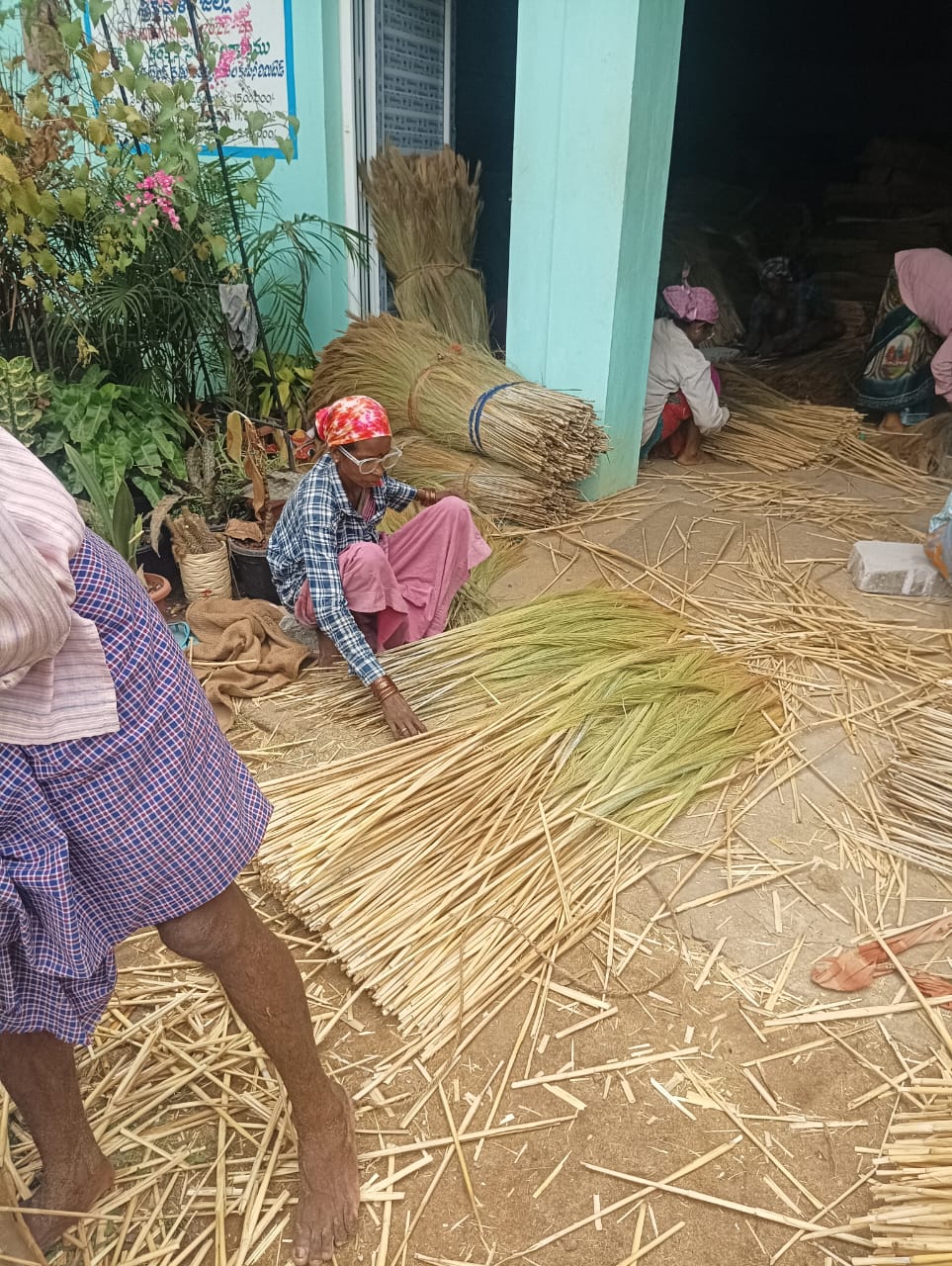
The enterprise generated an approximate profit of ₹7,000 in August 2025. In February 2026, the group also sold seven tonnes of previously unsold broom stock for ₹20,000 in gross sales, helping convert existing stock into income.
For women with limited independent income opportunities, the enterprise has created a way to earn through collective work and locally available resources. It has also provided the group with experience in processing, managing stock and accessing markets.
A Farmer Institution with Growing Reach
The change is not limited to individual activities. With 512 farmer members across 91 villages, FPCL has developed a wider institutional reach in an area where physical distance and poor connectivity remain significant barriers.
Farmers can now access certified seed, crop diversification opportunities, government-supported programmes, technical training and selected market linkages through a farmer institution located closer to their communities. Women constitute 332 of the 512 members, indicating substantial participation of women within the institution.
The institution’s partnerships with government departments, research organisations, private-sector actors and development organisations have further expanded the range of opportunities available to its members.
Sustaining the Change
FPCL’s OSSC seed licence provides the institution with an independent capacity to continue supplying certified seed. The village delivery model can continue to serve farmers in remote locations, while the relationships established with government departments, research institutions and private-sector partners provide opportunities for further expansion.
Going forward, FPCL plans to expand the Double Cross Hybrid Maize Seed Production Programme, strengthen the GI-tagged Kalajeera initiative and climate-resilient agriculture, extend services to more inaccessible villages and further develop the women’s broom enterprise through stronger market linkages.
The experience of FPCL in Gumma demonstrates that improving farmer livelihoods in remote areas requires more than providing individual inputs or training. A capable farmer institution can help address multiple barriers at the same time by improving access to quality inputs, connecting farmers with public and private services, supporting crop diversification, creating market opportunities and developing additional livelihood options for women.
For farmers in the interior villages of Gumma, the significance of FPCL lies not only in the services it provides, but in the improved access and opportunities that those services create. The institution is gradually strengthening farmers’ ability to make informed production decisions, access formal systems and participate in more organised agricultural and livelihood activities.
Shareholder Testimony
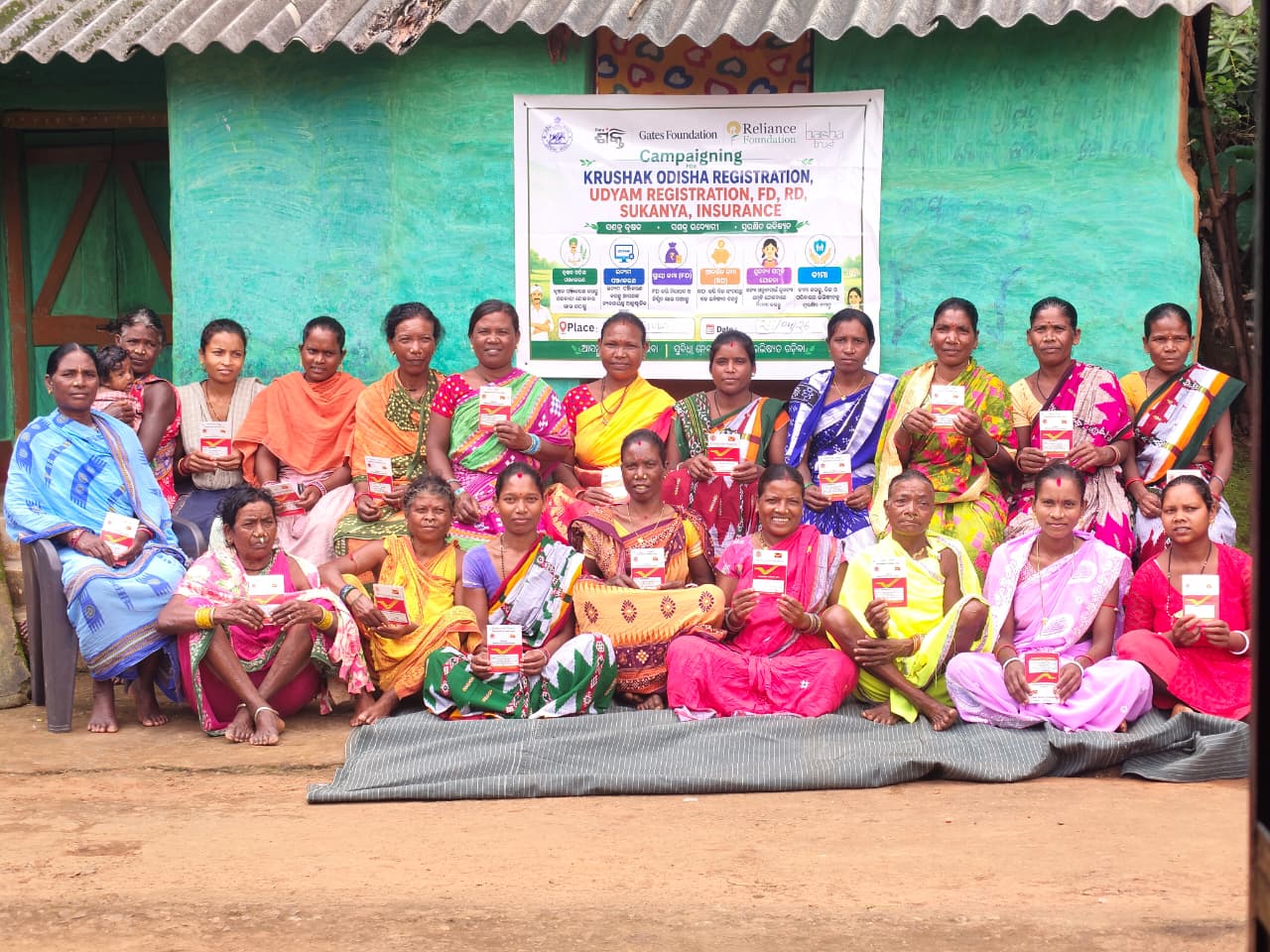
Earlier, we faced difficulty in accessing quality seeds and agricultural inputs and often depended on local dealers. Through the FPO, we are now getting quality inputs at reasonable prices along with proper guidance and support. This has helped us reduce input-related risks and improve our confidence in farming.
– Gayo Mandal, Tarava village