Ranjita Mallick, a 57-year-old resident of Rasaberuan village in Tirtol block of Jagatsinghpur district, Odisha, transformed her livelihood by creating an Eco Farm Pond. She lives with her husband, and the family owns 3 acres of land, including 1 acre of rainfed upland and 2 acres of paddy land.
Although the village lies in the fertile Mahanadi delta region, a major portion of their fragmented land is rain-dependent and characterized by poor moisture retention, making paddy farming economically risky and at times unprofitable for the family.
With her children working outside the village, the household depended partly on remittances and seasonal crop income. During difficult agricultural seasons, financial stress would increase. Ranjita felt the need for a dependable source of income of her own — not only to support household expenses but also to reduce reliance on her children and contribute more confidently to family decisions.
Participation in the Producer group
In 2024, Harsha Trust, with support from HDFC Parivartan, facilitated the formation of the “Maa Bhagabati Producer Group,” with 32 members in it. Through this platform, women were encouraged to explore new livelihood opportunities and strengthen their economic roles.

Ranjita actively participated in the discussions and proposed converting a portion of her low-productive land into a farm pond to create a reliable income source. Her initiative marked an important step toward financial self-reliance and strengthened her confidence as a decision-maker within her household and community.
Creating the Eco Farm Pond
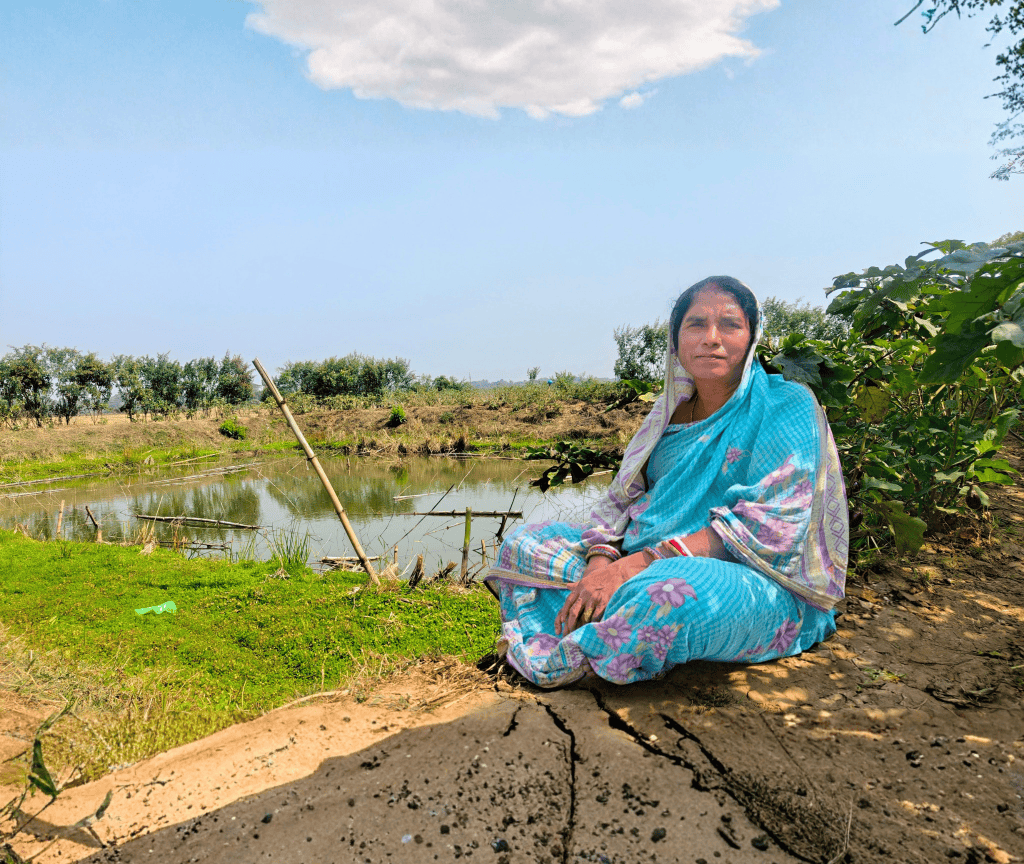
Determined to create a reliable source of income, Ranjita converted 12 guntha (0.30 acre) of her low-productive paddy land into an integrated Eco Farm Pond model. Out of this, 2 guntha was excavated for the pond, while the remaining area was developed for vegetable cultivation and bund crops, ensuring that no portion of land remained underutilized.

She took active responsibility for ensuring year-round water availability by channeling runoff water from nearby uplands into the pond. With technical guidance from Harsha Trust, she strengthened her skills in pond management, scientific fish feeding practices, appropriate fingerling selection, and bund intensification.
Beyond training, she received critical input support, including inlet and outlet pipes, pond construction assistance, and seedlings of coconut, betel nut, and pigeon pea for bund plantation. However, the planning, supervision, and day-to-day management of the pond remained under her leadership. The farm pond became not just a water harvesting structure, but a productive asset owned and managed by her — marking her transition from a traditional cultivator to an asset-holding entrepreneur.
Fish Farming journey
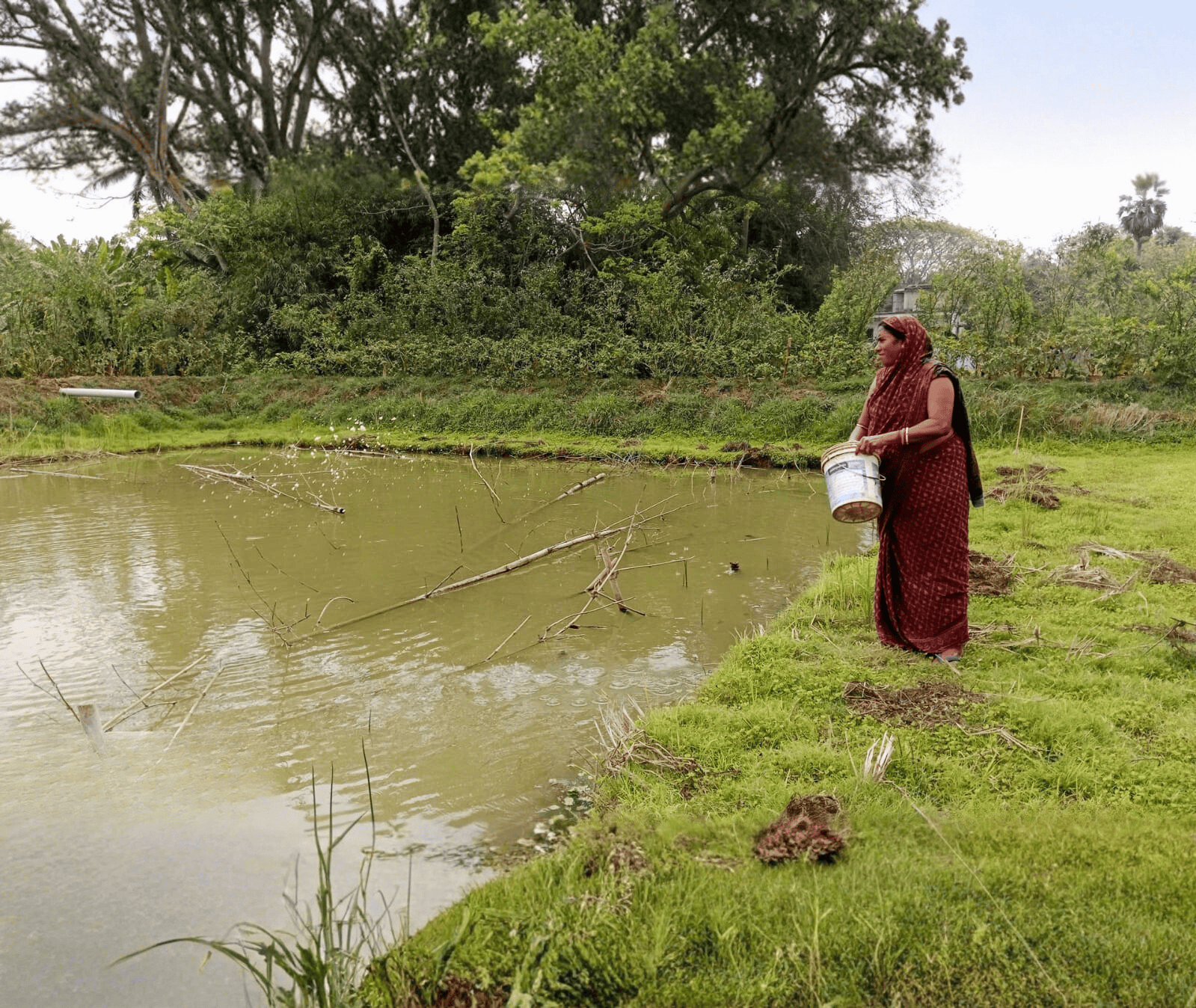
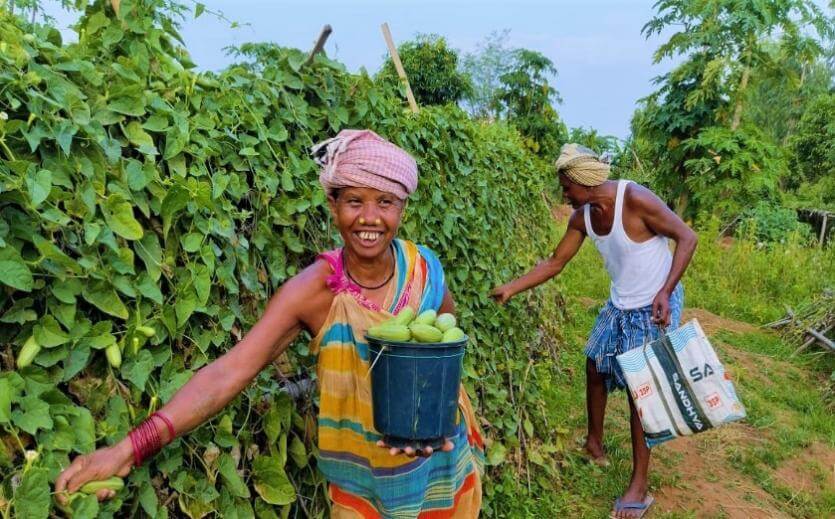
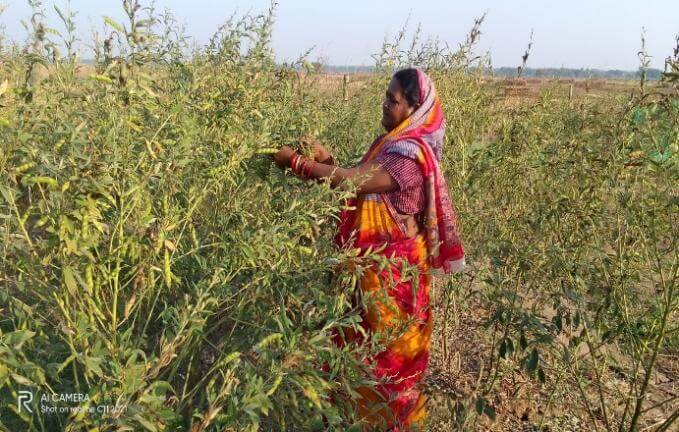
In July 2025, Ranjita began her fisheries enterprise by stocking 500 Rupchandi yearling fish in her farm pond and personally managing feeding, water quality, and growth monitoring. Alongside fish rearing, she adopted bund intensification under the Eco Farm Pond approach, cultivating brinjal, okra, beans, and pigeon pea along the pond bunds and adjoining land to maximize the productive use of every available space.
Within a few months, she harvested vegetables worth approximately ₹44,000. As a shareholder of Swayamswadhin Farmer Producer Company (FPC), she supplied her produce directly to the FPC, ensuring assured procurement and better price realization. This reduced her dependence on local traders and strengthened her role in collective marketing decisions.
In August 2025, Ranjita further expanded her enterprise by stocking 2,000 Rupchandi, Rohi, Bhakur and Mirkali fingerlings to increase productivity and diversify risk. By carefully planning the harvest during the local wedding season, when fish demand is high, she expects to earn nearly ₹70,000 within 3–4 months. Her ability to align production with market demand reflects her growing confidence as a rural entrepreneur and informed decision-maker.
Vegetable Income
| Sl. No | Name of the Vegetable | Total (in kgs) | Cost (per Kg) (Rs) | Amount (in Rs) |
|---|---|---|---|---|
| 1 | Brinjal | 1000 | 30 | 30,000 |
| 2 | Okra | 75 | 40 | 3,000 |
| 3 | Beans | 25 | 40 | 1,000 |
| 4 | Pigeon pea (Arhar) | – | – | 10,000 |
| Total Income | 44,000 | |||
Fish Income
| Fish Variety | No. of fish introduced to the pond | Fish price per Kg | Amount (in RS.) |
|---|---|---|---|
| Rupchandi Rohi Bhakura Mirkali | 700 Kgs | 100 | 70,000 |
Overall, Mrs. Malik earned approximately ₹1.14 lakh during the year through the integrated farm pond model, making it the second-highest source of income for her household. More importantly, she manages this income herself.
Today, she contributes to household expenses, repays EMIs on time, and supports her husband without relying on her children. The farm pond is no longer just an agricultural intervention — it is a symbol of her financial independence.
Her journey reflects how access to productive assets, technical support, and collective platforms can enable rural women to move from vulnerability to economic empowerment.