Nandapur Block | Koraput District | Odisha
Summary
Atanda village has transitioned from a rainfed, subsistence-based agrarian economy to a diversified and resilient livelihood system through a combination of institution building, sustainable agriculture, convergence, and community-led planning. With strengthened SHGs, improved irrigation access, adoption of diversified cropping systems, and enhanced market linkages, the farming households now experience higher and more stable incomes. The integration of renewable energy solutions, women-led enterprises, and INRM planning has further reinforced long-term sustainability and local governance.
1. Introduction
1.1 Atanda Village Profile
Atanda village, located in Nandapur block of Koraput district, is a predominantly tribal settlement with 115 households and a population of 424, comprising 204 men and 220 women. The village is largely inhabited by Scheduled Tribe (ST) communities (77%), followed by OBC (20%) and SC (3%) households. Desia is the commonly spoken language, reflecting the local cultural context.
Situated approximately 26 km from the Block Headquarters and 22 km from the nearest market at Padua, Atanda remains relatively remote, with limited access to essential services and market linkages. Livelihoods in the village are primarily dependent on agriculture, supplemented by livestock rearing, wage labour, and small businesses.
Geographically, Atanda lies in a semi-undulating terrain, bordered by a water reservoir on one side and surrounded by agricultural lands. The soil is predominantly sandy loam, with land classified into upland (Dangar Jami), medium land, and lowland (Beda Jami), interspersed with patches of forest and hillocks. This natural setting offers potential for diversified agriculture, although it remains underutilized due to systemic constraints.
1.2 Livelihoods and Economy
The workforce in the village is predominantly agrarian, with around 75% engaged as main workers and 20% as marginal workers. Among marginal workers, daily wage labour is the most common (20%), followed by engagement in NTFP collection (30%) and a small proportion involved in seasonal migration (around 2%).
Landholding is modest, averaging around one acre per household, with no recorded forest land ownership. Nearly 65-70% of households are smallholders, about 25% have relatively larger landholdings, and around 5% are landless. Agriculture remains the primary livelihood, with cropping systems that include paddy and millets as staples, along with seasonal vegetables and oilseeds. However, irrigation is limited to streams and canals, making agriculture highly dependent on rainfall.
Major crops:
- Paddy
- Millet (Ragi and little Millet)
- Vegetables (Potato, Sweet Potato, Tomato, Onion, Brinjal, Chili, cauliflower, Cabbage, beans, Okra, carrot, Garlic, Cassava, Yam, Bitter guard)
- Oil Seed: Niger, Ground nut
- NTFP: Tamarind, Siali leaves, Mango, and Karanja
Livestock
Livestock rearing, particularly poultry and goatery, is mostly subsistence and is reared as a buffer source of income by 60% of the households.
2. Key Challenges in Livelihoods
Despite its agricultural potential, Atanda faces several interrelated challenges that constrain livelihoods and overall development, such as
- Agriculture in the village has traditionally been characterized by monocropping, with cultivation largely restricted to the Kharif season.
- Limited irrigation facilities mean that farming activities come to a halt after the monsoon, leaving land fallow for a significant part of the year. Vegetable cultivation remains limited in scale, covering only about 10 acres.
- Farmers largely follow conventional farming practices, with low adoption of farm mechanization. Crop losses due to animal attacks further increase the vulnerability of farming households.
- Livestock rearing continues to be subsistence-oriented, with limited integration into income-generating activities.
- Market access is another key constraint, with the nearest markets located 18–22 km away, restricting farmers’ ability to sell produce at remunerative prices.
- As a coping mechanism, a small proportion of households migrate temporarily to Andhra Pradesh in search of work.
- Although 11 Self-Help Groups (SHGs) were promoted by OLM, they remained largely inactive, with limited engagement beyond savings and credit. There is no structured platform for collective planning, production, or market engagement.
- Participation of women in Gram Sabha meetings is also limited, and access to government schemes remains constrained due to a lack of awareness.
3. Catalysing Transformation in Atanda – Intervention by Harsha Trust with the support of ABF
Harsha Trust, with support from ABF, began work in Atanda in 2023 by strengthening community institutions. The interventions expanded diversified livelihoods, sustainable agriculture, livestock development, nutrition, and improved governance and financial inclusion. Convergence with government departments and climate-resilient technologies also played a key role in driving a sustained transformation in the village.
3.1 Atanda Village – Intervention Timeline (2021–2026)
| Year | Key Interventions / Milestones |
|---|---|
| 2021 | • Formation of Badadevata FPC under CBBO in Nandapur block. |
| 2022 | • Expansion of Badadevata FPC in terms of share capital and share money. |
| 2023 | • Initiation of ABF Phase III in Atanda. • Revival and strengthening of 11 inactive SHGs (previously under OLM) through community mobilisation and institution strengthening |
| 2024 | • Initiation of Vegetable Clusters – Diversified cropping system (DCS) • Capacity building on NPM & POP for key crops and livestock management • Strengthening of SHGs, CLGs, and GPLFs through regular meetings, credit linkage, savings, and MIPs. • Nutrition interventions through PLA, counselling, and nutrition gardens. • Convergence with Agriculture Department: Mandia seeds (30 HH, 20 acres); irrigation pipes (4 farmers); power weeders (5 farmers); 160 vegetable crates (80 farmers). • Installation of 1 solar irrigation pump (incl. 5 HP covering ~40 HH) with the support of ABF • Installation of solar fencing (29 acres, 40 HH) through community contribution |
| 2025 | • Continued convergence with Govt Dept: power weeders (4 farmers), irrigation pipes (3 farmers), solar & sticky traps, and vegetable crates (40 farmers). • Establishment of solar paddy & millet processing unit (SELCO & UNDP). • Installation of 3 HP solar irrigation pump (25 HH, 11 acres) – supported by ABF • Development of solar champions (3 trained technicians). • Strengthening women’s agency through credit linkages (51), RD (5), Sukanya Samridhi (7), digital payments (11); 4 Udyam registrations • Active Participation of women in Gram Sabha (49%) and approval of the INRM plan • 1 BRC unit setup. |
| 2026 | • Establishment of mushroom cultivation unit through convergence (Dept. of Horticulture & Agriculture, 50% subsidy, total cost ₹2 lakh). • Initiated INRM interventions |
4. Key Interventions in Atanda
4.1 Strengthening the Institutional Ecosystem: A Women-Centric Approach
A key pillar of the intervention in Atanda was the strengthening of community institutions, with a strong focus on women-centricity and leadership. Rather than creating parallel structures, Harsha Trust adopted a partnership-based approach, working within the existing institutional ecosystem and strengthening it for long-term sustainability.
Revival of SHGs:
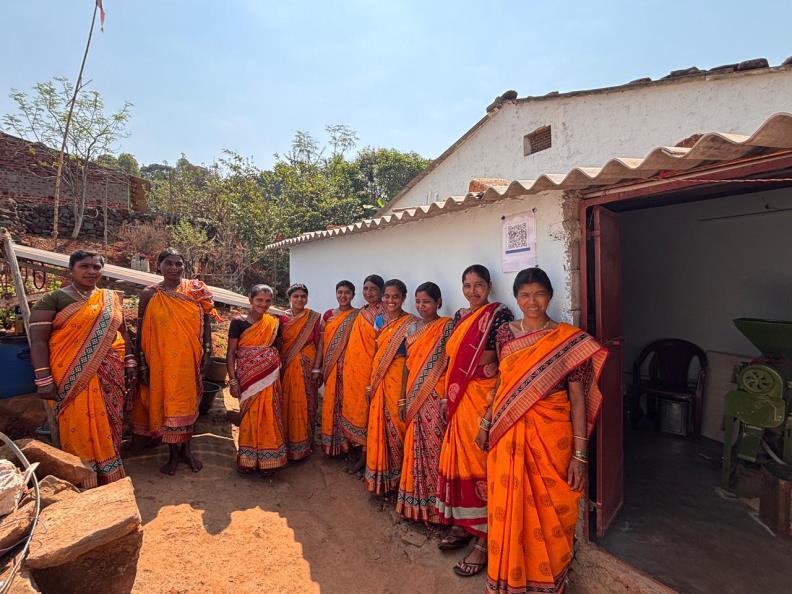
Of the 11 SHGs promoted earlier under Odisha Livelihoods Mission (OLM), 4 were defunct. These were systematically revived, and today all 11 SHGs are functional, conducting regular meetings, maintaining records, and ensuring consistent savings of ₹100 per member per month. Seven SHGs have been linked to banks, strengthening their access to credit and financial inclusion with the support of Mission Shakti.
Continuous training and capacity-building initiatives, focusing on leadership development, financial management, and governance systems, were organised. Special emphasis was placed on enhancing women’s participation and leadership within these platforms.
Atanda CLF in action:
At the federation level, the Atanda Cluster Level Federation (CLF) was revitalized and regularized. To ensure effective governance and role clarity, three functional committees—Social, Livelihood, and Financial—were established within the CLF.
SHGs and CLFs were supported to access various government schemes and entitlements, and members received training on livelihood diversification. Concepts such as enhanced savings, credit, and Business Development Plans (BDPs) for bank linkage were introduced, enabling SHGs to gradually transition towards micro-enterprise models.
Linkage with FPC:
54 farmers were linked as shareholders to the Badadevata FPC, enabling them to access input services, market linkages, and value addition opportunities.
4.2 Agriculture Intervention: Climate-resilient production systems
Agriculture interventions in Atanda focused on transitioning the village from subsistence, single-season farming to a diversified, year-round production system.
Trainings:
Through training on the Package of Practices (PoP) and promotion of Non-Pesticide Management (NPM), farmers adopted improved and sustainable cultivation practices. The introduction of a Diversified Cropping System (DCS) enabled a shift from monocropping to multi-cropping.
4.2.1 Vegetable Cluster – Diversified Cropping System
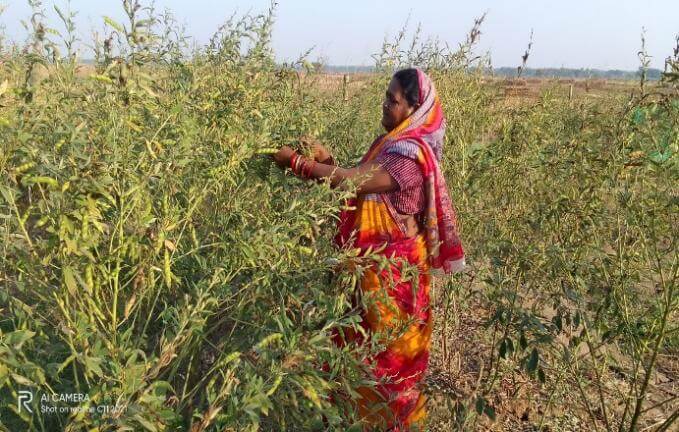
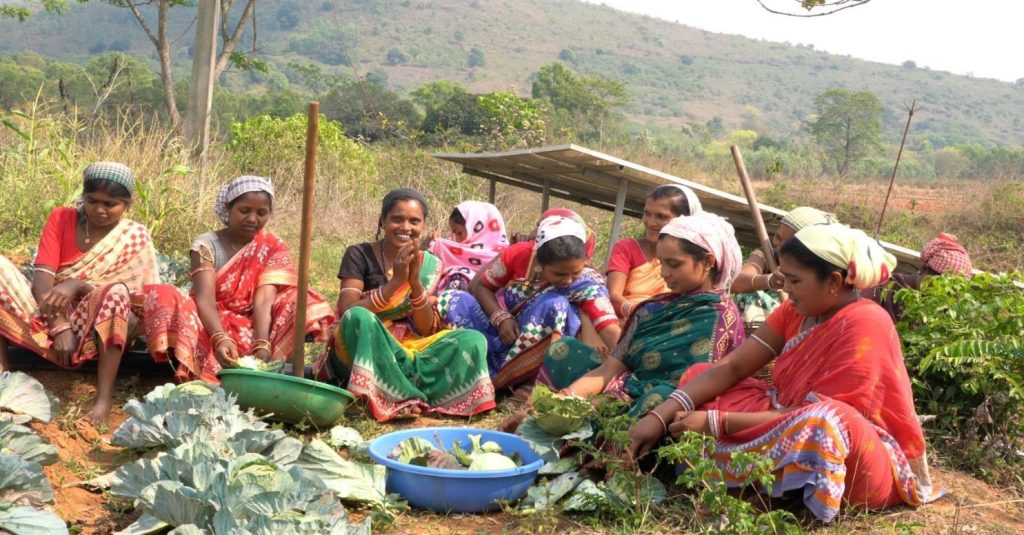
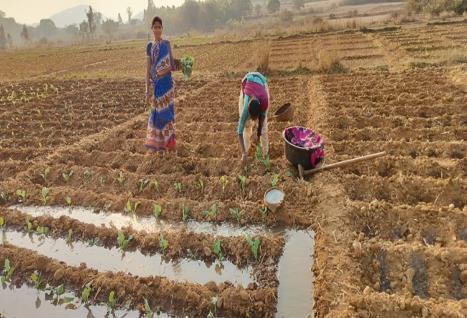
A key breakthrough was the promotion of cluster-based vegetable cultivation. Today, 64 households practice vegetable farming across all three seasons, adopting 50-cent model plots within a cluster approach. The cultivated area has expanded from 10 acres to 40 acres, transforming Atanda into a year-round vegetable-producing village.
Caselet 1:
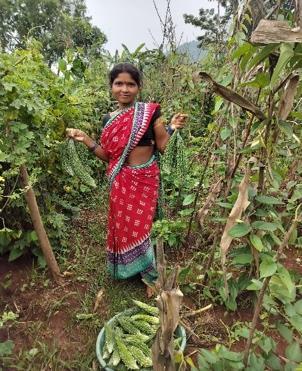
Champabati’s Success through Diversified Cropping System – (35 Cent – Vegetable Cultivation Model)
Name of Farmer:
Champabati Kirsani (26)
Crops cultivated:
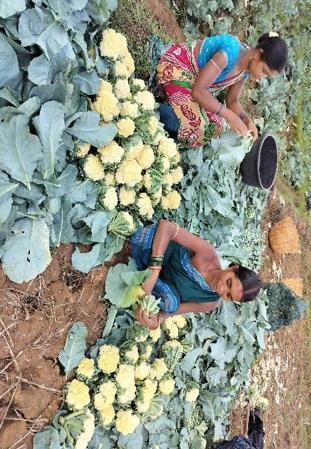
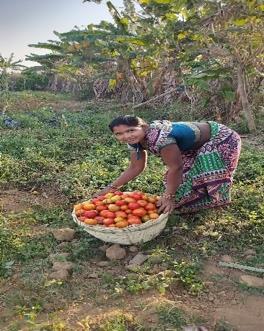
Champabati and Champe own 35 cents of land, which is used to grow Tomato, Carrot, Cauliflower and Bitter guard.
Key Interventions:
- Training on crop management: Harsha Trust has provided training on modern agricultural techniques, pest control, soil health management, and irrigation practices. Crops chosen based on market demand, suitability to the local climate, and personal preference.
- Input support: Access to quality seeds, organic fertilizers, and crop protection materials at subsidized rates from BADADEVTA FPC.
- Improved Farming Practices and Techniques: Champabati practices sustainable farming through crop rotation, organic inputs, and natural pest control methods, with most farm work managed by the family and supported by local labour during peak seasons.
- Market Linkage: Harsha Trust has helped Champabati connect with local markets, ensuring that her produce gets a good price.
Crop-wise Economics of Champabati Kirsani’s Farm
| Crop | Area (Cents / Acres) | Plant Density | Total Input Cost (₹) | Yield | Price (₹/kg) | Total Revenue (₹) | Net Profit (₹) |
|---|---|---|---|---|---|---|---|
| Carrot | 5 cents (0.05 ac) | 500 plants | 1,700 (Seed: 200 + Fertilizer: 500 + Labour: 1,000) | 10 qtl (1000 kg) | 20 | 20,000 | 18,300 |
| Tomato | 10 cents (0.10 ac) | 1,000 plants | 5,500 (Seed: 500 + Fertilizer: 2,000 + Labour: 3,000) | 10 qtl (1000 kg) | 20 | 20,000 | 14,500 |
| Cauliflower | 10 cents (0.10 ac) | 2,000 plants | 6,600 (Seed: 600 + Fertilizer: 2,000 + Labour: 4,000) | 600 kg | 25 | 15,000 | 8,400 |
| Bitter Gourd | 5 cents (0.05 ac) | 178 plants | 5,600 (Seed: 600 + Fertilizer: 2,000 + Labour: 3,000) | 1,246 kg | 20 | 24,920 | 19,320 |
Increased Crop Yield:
Through consistent hard work and improved farming techniques, Champabati has managed to increase her crop yield over the years. By investing in better seed varieties and improving irrigation methods, her farm’s productivity has grown significantly.
Total Revenue = ₹18,300 + ₹19,320 + ₹14,500 + ₹8,400 = ₹60,520
With total expenses of ₹19,400 (combined for all crops), Champabati’s net profit comes to approximately ₹60,520. Thus, even within 0.35 acres, diversified cropping generates substantial income, with vegetables emerging as high-return crops, demonstrating the viability of smallholder intensification.
4.2.2 Solar-powered Lift Irrigation Systems
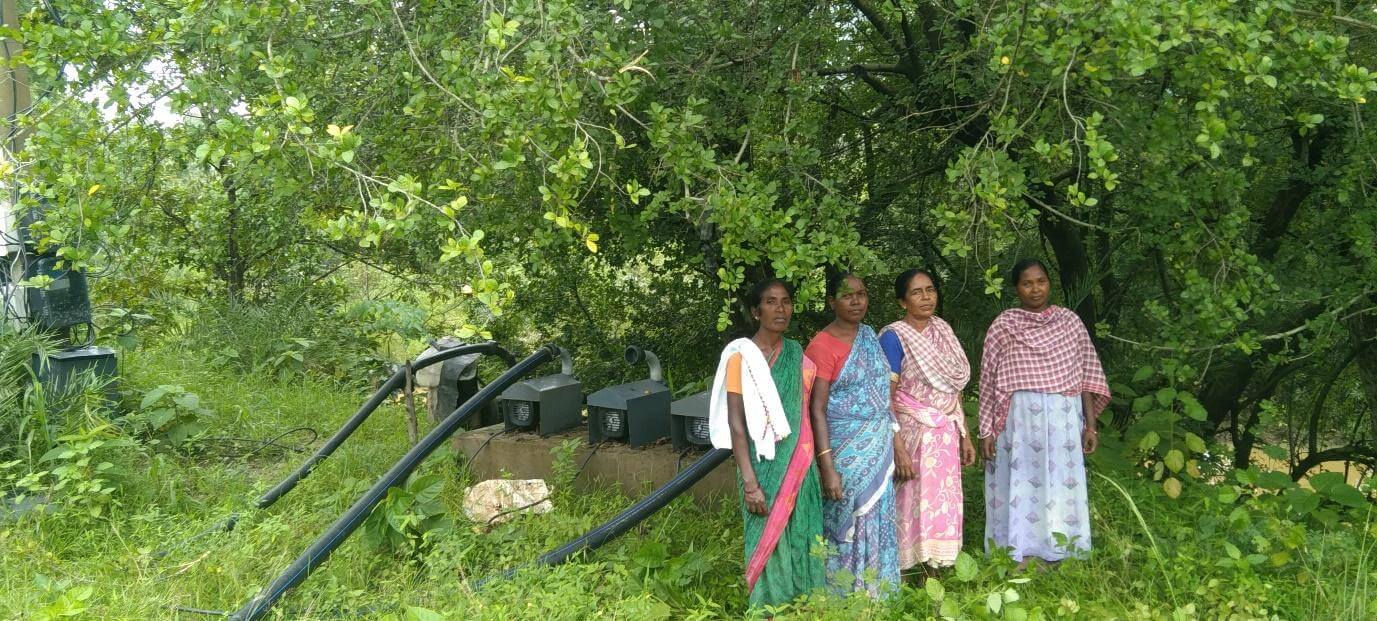
Access to irrigation played a critical role in this transformation. Solar irrigation systems (5 HP and 3 HP) were installed, covering 40 acres and enabling assured irrigation. A Water User Committee (WUC), comprising all 64 households, was formed to ensure equitable water distribution and maintenance, with each household contributing ₹500 and building a corpus of ₹30,000.
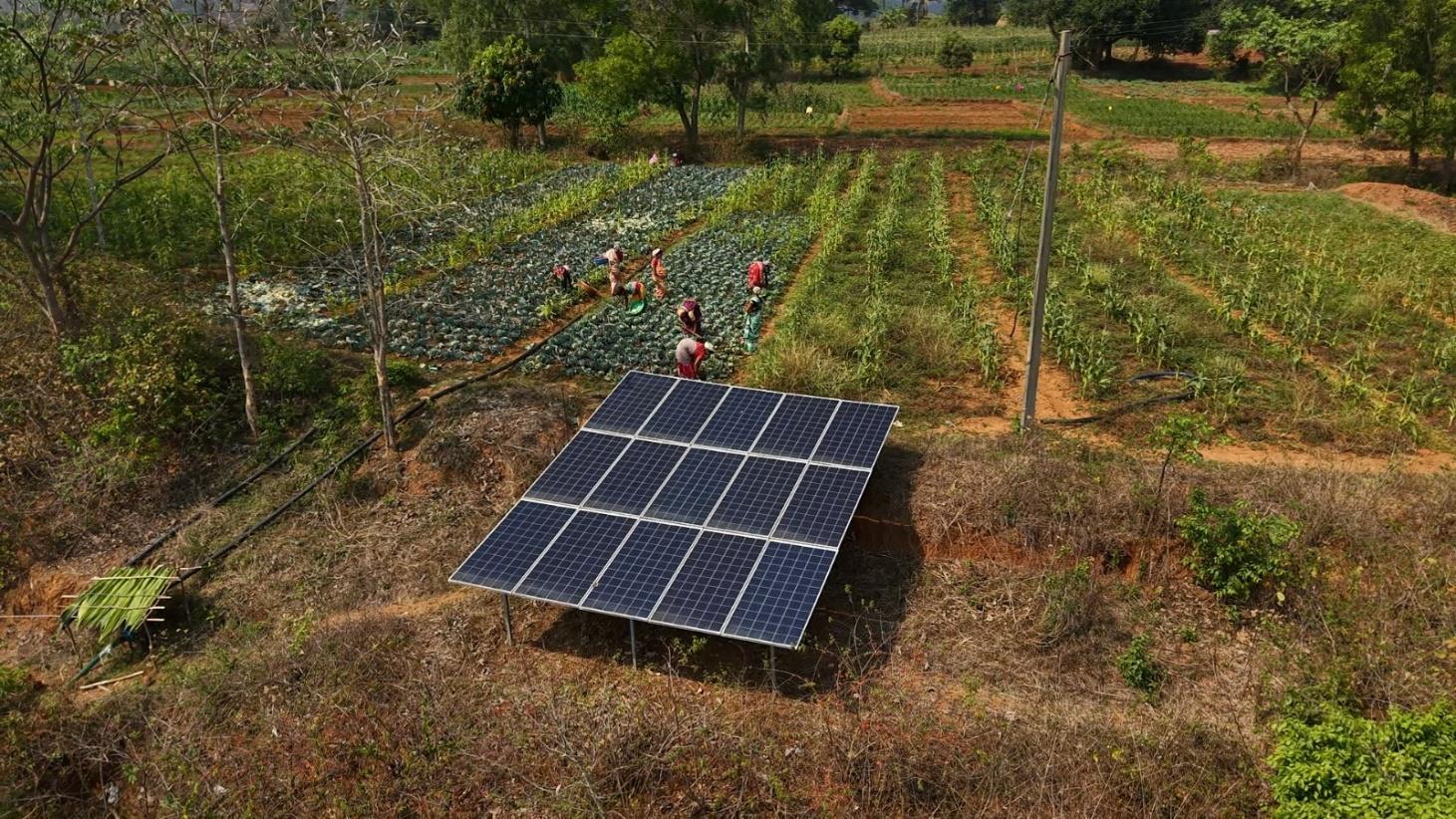
Caselet 2: 5 HP Solar Irrigation System
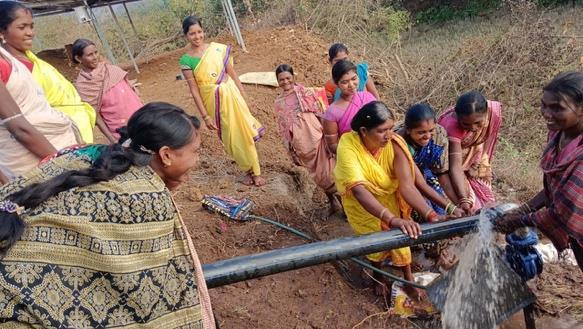
Members of Maa Bhairabi and Maa Tarini SHGs, who earlier cultivated barely 3–4 acres due to a lack of water, expanded their farming after the installation of a 5 HP solar irrigation system under the ABF programme. Coming together as a Water User Group—Chashi Ekata Utpadaka Gosti—20 women contributed ₹1,000 each and established a system for equitable water sharing.
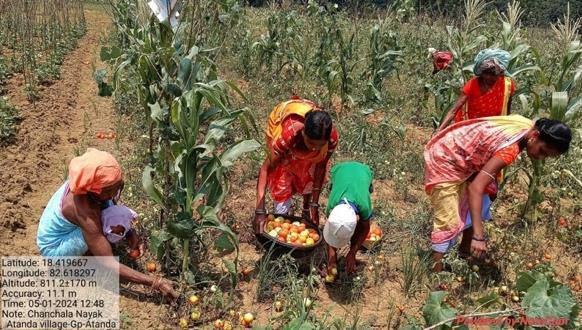
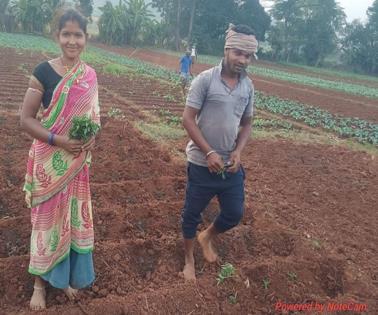
With assured irrigation, they expanded cultivation to nearly 20 acres, adopting diversified crops such as vegetables, maize, groundnut, and yams, along with intercropping practices. Supported through regular trainings on organic inputs and linked to the Badadevata FPC for inputs and market access, the group has now transitioned to year-round farming.
This shift has significantly enhanced incomes, with several farmers earning ₹30,000–₹40,000 per season, demonstrating the transformative impact of reliable irrigation and collective action.
4.2.3 Crop Protection – Solar Fencing and BRC unit
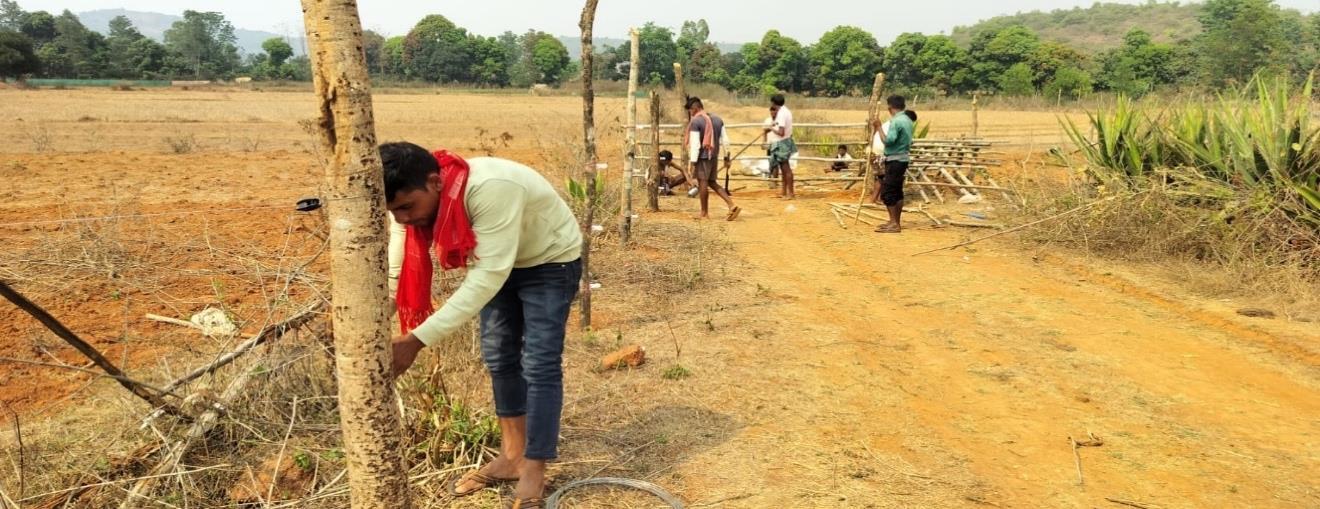
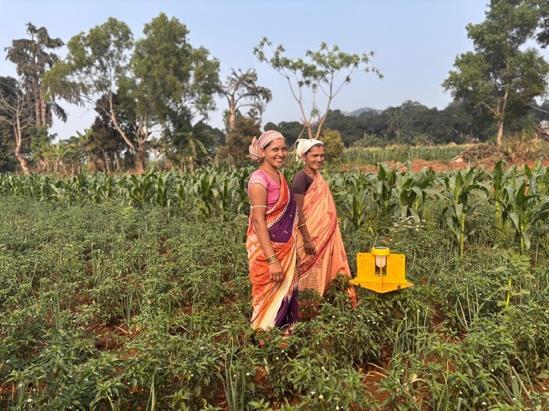
To address persistent crop losses caused by wild animals, solar fencing was introduced as a sustainable, community-led solution in Atanda. Earlier, farmers relied on ineffective traditional methods such as bamboo and thorn fencing, leading to frequent losses, reduced productivity, and increased vulnerability.
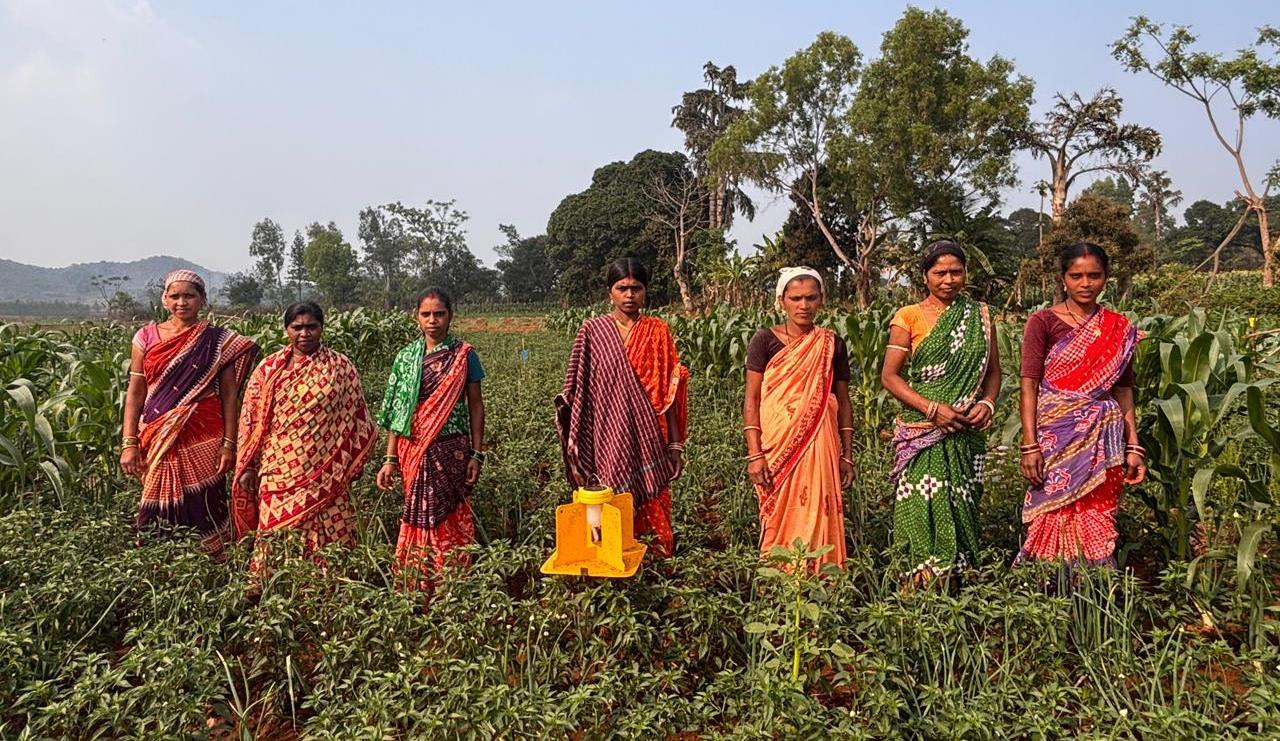
Through collective farmer contributions, 10 solar fencing units were installed across vegetable plots, covering nearly 40 acres and benefiting 60 households. With individual contributions of ₹700–₹1,000, farmers mobilized around ₹50,000, ensuring strong ownership, cost-sharing, and long-term maintenance.
As a result, crop losses have reduced significantly, leading to improved productivity and enabling farmers to confidently adopt multi-season and diversified cropping. The intervention has also reduced the need for night guarding, lowered labour costs, and enhanced overall farm incomes.
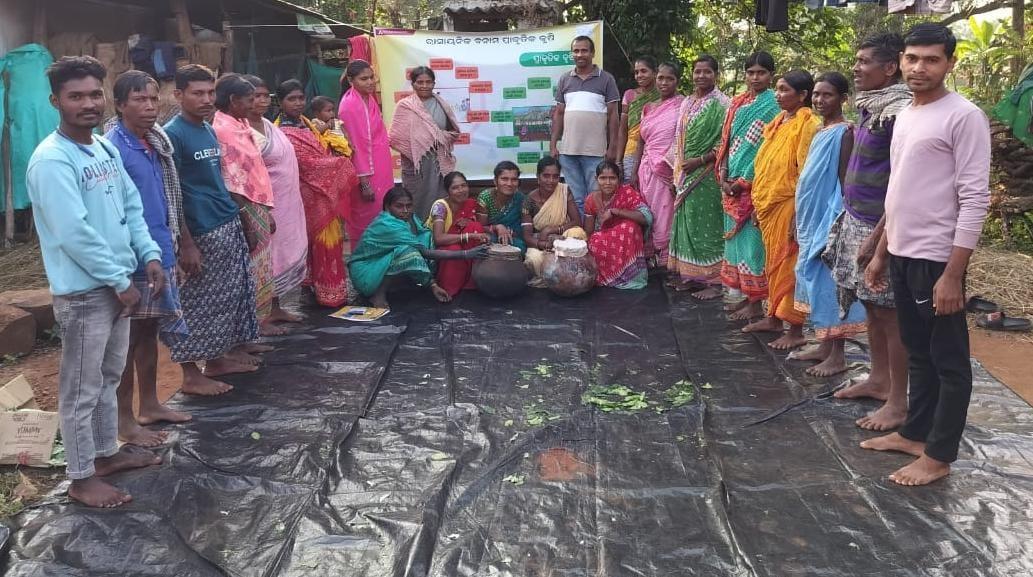
A Bio-Resource Centre (BRC), managed by SHG members, was established to promote organic formulations such as Neemastra and Agniyastra, supporting NPM adoption and adoption of climate-resilient PoP, across all 64 households.
4.2.4 Livestock Development
Harsha Trust enabled women members with improved livestock-based livelihoods through training and capacity building, focusing on deworming, vaccination, and ethnoveterinary practices to improve animal health. These interventions have helped establish regularized healthcare practices and enhance livestock productivity. Linkages with the Veterinary Department have been facilitated to support poultry development through convergence, contributing to livestock development.
4.2.5 Promoting Rural Entrepreneurs
Harsha Trust initiated the Entrepreneurship Development Programme (EDP) to promote local entrepreneurship by identifying potential entrepreneurs within the village. A total of 64 households built foundational skills for livelihood diversification, with selected individuals further supported through Business Development Programme (BDP) training, Udyam registration, digital payment adoption, and access to credit linkages.
At the village level, three youth have been trained as solar champions, providing technical support for solar-powered systems and strengthening local service delivery. These youth are now earning approximately ₹6,000 per month, demonstrating early success in decentralized rural enterprise models.
4.2.6 Value Addition and Processing Unit
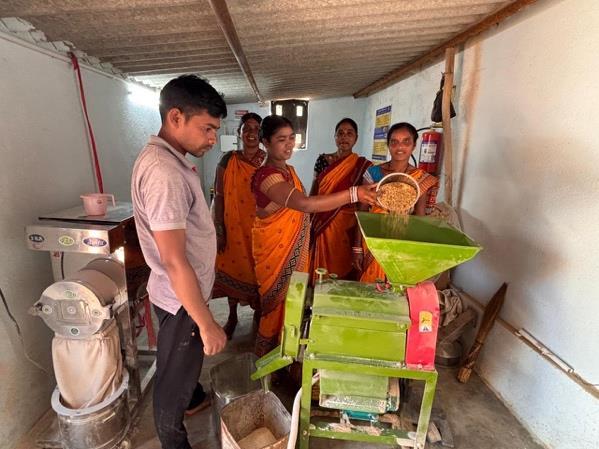
The introduction of a solar-powered rice huller and millet pulveriser has transformed Atanda’s post-harvest ecosystem. Established in 2024 with support from the SELCO Foundation and UNDP, and an initial investment of ₹7.2 lakh, the enterprise addressed a long-standing challenge. Earlier, households spent 4–5 hours travelling to distant mills, often returning without processing due to unreliable electricity.
Today, the SHG-led unit serves over 200 households across five villages, reducing processing time to just 30–45 minutes. Operated efficiently in two shifts, the enterprise generates a steady income of ₹14,000–15,000 per month from paddy processing and an additional ₹7,000 from millet processing. A corpus fund of ₹50,000 has been created and maintained by the SHG to support operations and maintenance, ensuring long-term sustainability and ownership. Beyond income generation, the enterprise has significantly reduced drudgery, strengthened local value addition, and enhanced women’s agency in decision-making.
Led by Chanchala Nayak, a member of Maa Bhairabi SHG, the initiative stands as a strong example of women-led entrepreneurship and collective enterprise management. Four women are directly engaged in the unit, sharing responsibilities across operations, bookkeeping, and maintenance. Chanchala, as an operator, earns approximately ₹6,000 per month, contributing to an increase in her household income to nearly ₹1.9 lakh annually.
As Chanchala reflects, “Before the mill, I had no income I could call my own. Today, I understand every rupee that comes in. Now, I have an equal say in decisions made for my family.”
4.2.7 Market Linkage through FPC
Market access has been significantly strengthened through facilitation by Badadevta FPC, enabling farmers to aggregate produce and engage in bulk sales, while continuing to leverage local haat-based marketing channels for immediate cash flow. Strong convergence with key government departments—including Agriculture, Horticulture, Livestock Departments, and Mission Shakti- has further enabled farmers to access relevant schemes, inputs, and institutional support. This integrated approach has improved market connectivity, reduced dependency on intermediaries, and enhanced income realization at the household level.
4.3 Integrated Natural Resource Management
Of the total geographical area of 569 ha, 122 hectares were identified for INRM treatment. An initial INRM plan covering 67 hectares was prepared with a financial outlay of ₹75.38 lakh. This was supported through convergence, with Harsha Trust covering 16 hectares (₹26,84,274) and government schemes supporting 5 hectares (₹13,00,000).
The process was grounded in strong community engagement, including village meetings, transit walks, and social and resource mapping. A detailed INRM plan was then prepared, aligned with village priorities, and approved through the Palli Sabha and Gram Sabha.
Key interventions focused on land development and water conservation. Activities included trench-cum-bunding to reduce soil erosion and farm ponds to improve water availability. Structured approaches such as the 5% and 30×40 models were introduced to enhance land productivity.
5. Convergence: Strengthening Systems Through Partnerships
The transformation in Atanda has been accelerated through strong convergence with government departments and development partners. This has enabled access to resources, technology, and institutional support.
- Close collaboration with Agriculture and Horticulture Departments enhanced farm mechanization and productivity. Assets worth ₹10 lakh—including power weeders, solar lights, irrigation systems, sprinklers, and pest management traps—were mobilized and made accessible to farmers. A mushroom production unit infrastructure has been established at a cost of ₹2 lakh and is expected to become operational soon, creating new income opportunities.
- Mission Shakti and OLM strengthened institutions and enabled credit linkages.
- Project Swayamshree promoted women-led entrepreneurship,
- SELCO Foundation and UNDP supported solar-powered processing units.
6. Results and Impact
6.1 Economic Impact
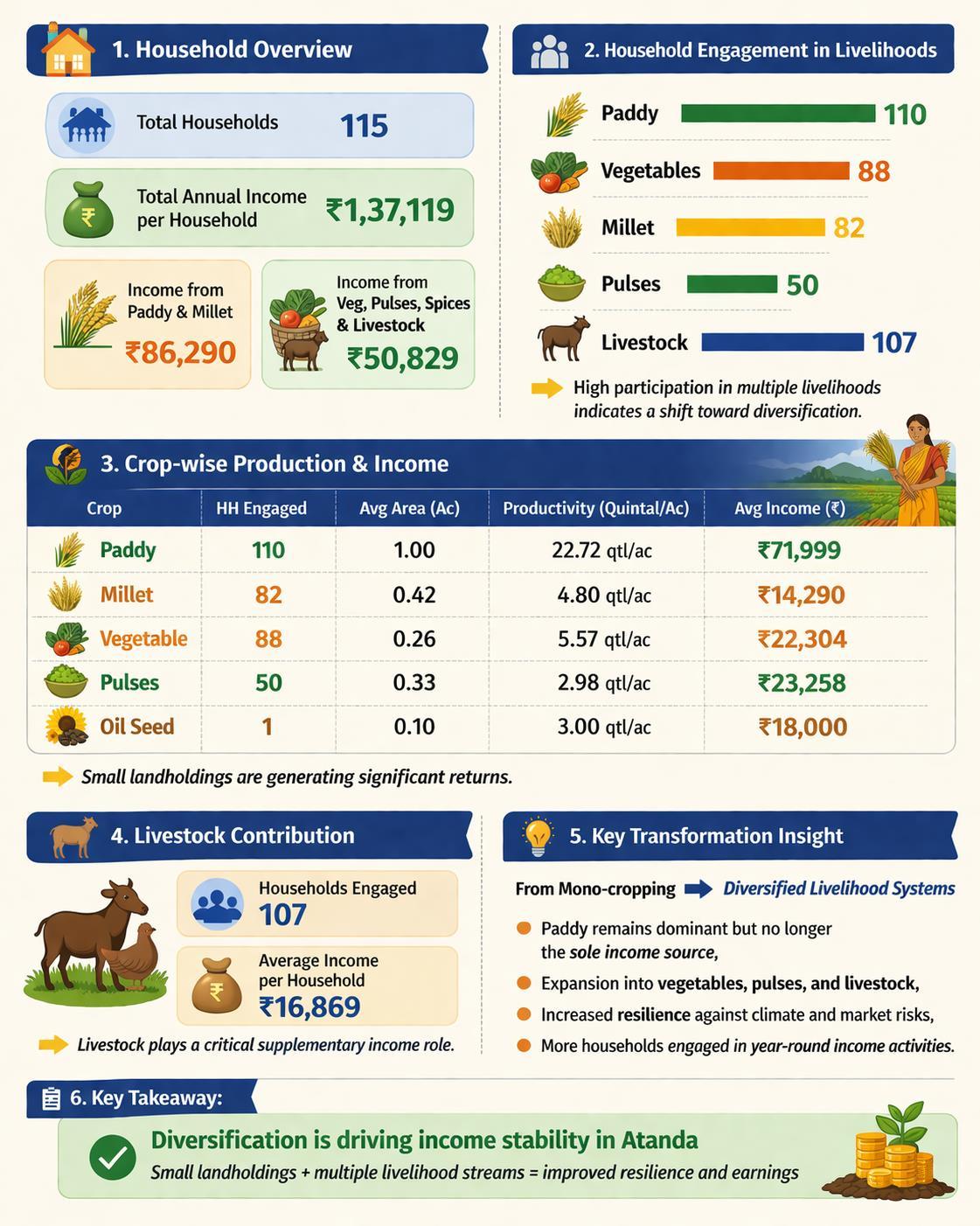
Overall, even within small landholdings, households are now generating higher and more stable incomes through diversification, improved productivity, and year-round livelihood activities.
- Agricultural expansion from 12 acres (46 HHs) to 38 acres (52 HHs), supported by solar lift irrigation, has resulted in improved cropping intensity and an estimated ~35% increase in production.
- Household engagement in diversified cropping system —110 HHs in paddy, 88 in vegetables, 82 in millets, 50 in pulses, 107 in livestock, and 1 in oilseeds—reflecting widespread adoption of multiple income sources.
- The average annual household income stands at approximately ₹1.37 lakh per household, compared to a baseline of Rs.35000 to 50,000/-
- ₹86,289 from paddy and millets and ₹50,829 from vegetables, pulses, spices, and livestock (adding ₹16,868 per household annually), indicating a strong shift towards diversified livelihoods.
6.2 Social Impact
The interventions have led to strong institutional and social outcomes.
- All 11 Self-Help Groups (SHGs) are now fully functional, including the revival of four previously defunct groups, with regular savings of ₹100 per member per month and improved credit linkages through Mission Shakti.
- The Cluster Level Federation (CLF) is operational with structured Social, Financial, and Livelihood Committees, strengthening governance and collective action.
- Farmers are increasingly linked to the FPO for input access and market linkages, enhancing their bargaining power and integration into formal markets.
- Leadership and management capacities within the community have improved significantly, contributing to stronger local institutions.
- Community participation in governance processes has also increased, with approximately 40% women’s participation in Gram Sabha meetings, reflecting enhanced agency and inclusion.
- At the household level, increased incomes have translated into better savings, improved expenditure capacity, and enhanced financial security, particularly for women.
- Improved access to diverse crops has led to greater dietary diversity, contributing to better nutrition and overall well-being.
- Access to government schemes has increased with households’ coverage under: PDS: 96%, MGNREGA: 70%, Health cards: 90%, Pension access: 35%
6.3 Environmental Impact
The shift towards diversified farming systems has strengthened environmental sustainability and climate resilience. Together, these efforts have made the farming system more climate-resilient, resource-efficient, and environmentally sustainable.
- Moving away from monocropping, farmers now cultivate a mix of crops (millets, pulses, and oilseeds and vegetables), reducing vulnerability to climate variability and market risks.
- The adoption of Non-Pesticide Management (NPM) practices has reduced dependence on chemical inputs, improving soil health and ecological balance.
- Solar-powered lift irrigation systems have improved water use efficiency and reduced reliance on erratic rainfall.
- Solar fencing across 60 acres has reduced crop damage from wild animals, improving crop security and minimizing losses.
- A total of 122 hectares was identified for INRM treatment, with an initial plan covering 67 hectares approved by the Gram Sabha, with structured approaches such as the 5% and 30×40 models introduced.
7. Challenges and Learnings
- Strengthening community institutions, particularly SHGs, required sustained effort, as initial engagement was low and members had limited understanding of structured group functioning. Continuous handholding, regular meetings, and capacity building helped improve participation, ownership, and institutional maturity over time.
- Adoption of Non-Pesticidal Management (NPM) practices was initially slow, as farmers were accustomed to chemical inputs and immediate results. With demonstrations and increased awareness, farmers have gradually begun transitioning towards sustainable practices.
- Women’s participation in governance and decision-making is improving, though it remains a work in progress. Increased exposure and institutional support have strengthened their confidence, with growing participation in Gram Sabha and leadership platforms.
- Limited value addition and weak market linkages continue to constrain income potential, particularly for crops like chilli and turmeric. Strengthening processing and market systems remains an important area for future focus.
- While solar irrigation has improved water access, especially for some farmers, irrigation during the summer season remains a challenge. Expanding equitable irrigation coverage is critical for sustaining year-round agriculture.
- Challenges related to land documentation, dependence on forest land, and adoption of advanced technologies persist. However, increasing awareness, training, and convergence efforts are gradually addressing these gaps and improving access to government schemes and institutional support over time.
8. Way Forward
While Atanda has made strong initial progress, the next phase will focus on strengthening irrigation systems to enable year-round farming and ensure equitable access to water. Scaling INRM interventions and deepening climate-resilient practices will be critical to improving soil health, productivity, and long-term sustainability. Strengthening value addition and market linkages—particularly through the FPO—will help improve price realization and reduce dependence on intermediaries, while continued efforts on livelihood diversification and enterprise development will enhance income opportunities.
At the same time, enhancing women’s participation in governance and decision-making will remain a priority, building on existing institutional platforms. Focused efforts on health and nutrition, along with improved access to healthcare services, will support overall well-being, especially for vulnerable groups. Continued capacity building, technology adoption, and support for land documentation and access to entitlements will be key to consolidating gains and ensuring inclusive and sustainable development.